Maintenance Tips That Actually Extend Appliance Life
Simple, technician-tested habits that keep refrigeration, cooking and laundry equipment running longer at 5,980 feet.

Why Maintenance Matters More at This Elevation
Appliances installed at 5,980 feet work against physics that manufacturers calibrate for sea level.
Thinner air changes how gas burns, how compressors cycle, and how quickly seals dry out in Colorado's low humidity. A gas range that runs rich at sea level can run lean here, which shows up as a lazy blue flame, soot on cookware, or an oven that won't hold temperature. Refrigeration compressors also work harder in homes with dry indoor air, because gasket seals shrink and lose their grip faster than they would in a humid climate.
None of this means appliances fail sooner in Lone Tree, Castle Pines, Parker or Highlands Ranch. It means the maintenance schedule that came in the owner's manual, written for a generic climate, needs a few local adjustments. We've serviced homes in RidgeGate, Meridian, Heritage Hills and Carriage Club long enough to know which parts wear first at altitude and which manufacturer guidance to follow closely versus which to supplement.
The tips below are organized by the type of upkeep involved: routine tasks any homeowner can do, tasks that benefit from a technician's eye, and warning signs that mean it's time to call rather than wait. If something doesn't look right after you've tried the basics, Lone Tree Appliance Repair is reachable at (720) 575-1433 around the clock, with diagnostic visits scheduled 8 AM to 6 PM daily.
A Realistic Quarterly Maintenance Routine
Most homeowners don't need a maintenance binder. They need four things done consistently, four times a year.
- 01
Vacuum condenser coils
Pull the refrigerator or wine cooler out and vacuum the coils and the space underneath. Dust insulates the coils, forcing the compressor to run longer to reach the same temperature, which is the single most common cause of a warm fridge we get called out for.
- 02
Check door seals under tension
Close the door on a piece of paper and pull it out slowly. If it slides free with no resistance, the gasket has lost its seal, likely from Colorado's dry air drying out the rubber. A loose gasket lets humid kitchen air in, which shows up as frost buildup or excess condensation.
- 03
Inspect gas burner ports for altitude drift
Look at the flame color on every burner. It should be mostly blue with a small, tight inner cone. Yellow tips, excessive noise, or a flame that lifts off the burner ports usually means the air-to-fuel mixture has drifted out of spec for this elevation and the orifice or regulator needs recalibration.
- 04
Clean dishwasher filter and spray arms
Remove the lower filter basket and rinse it under the tap, then clear any debris blocking the spray arm holes with a toothpick. A clogged filter is the leading reason dishwashers leave grit on glassware or fail to drain completely at the end of a cycle.
When Ice Makers and Wine Coolers Need Extra Attention
Two categories of appliance suffer disproportionately from Colorado's dry climate and hard water: ice makers and wine coolers.
Ice makers rely on a steady water supply line, and mineral content in Front Range water can build scale inside the fill valve and water line over a few years, slowing fill time or stopping ice production altogether. We recommend replacing the inline water filter on schedule (every six months for most cartridge filters) even if the ice still tastes fine, because filter media saturates before flavor changes are noticeable.
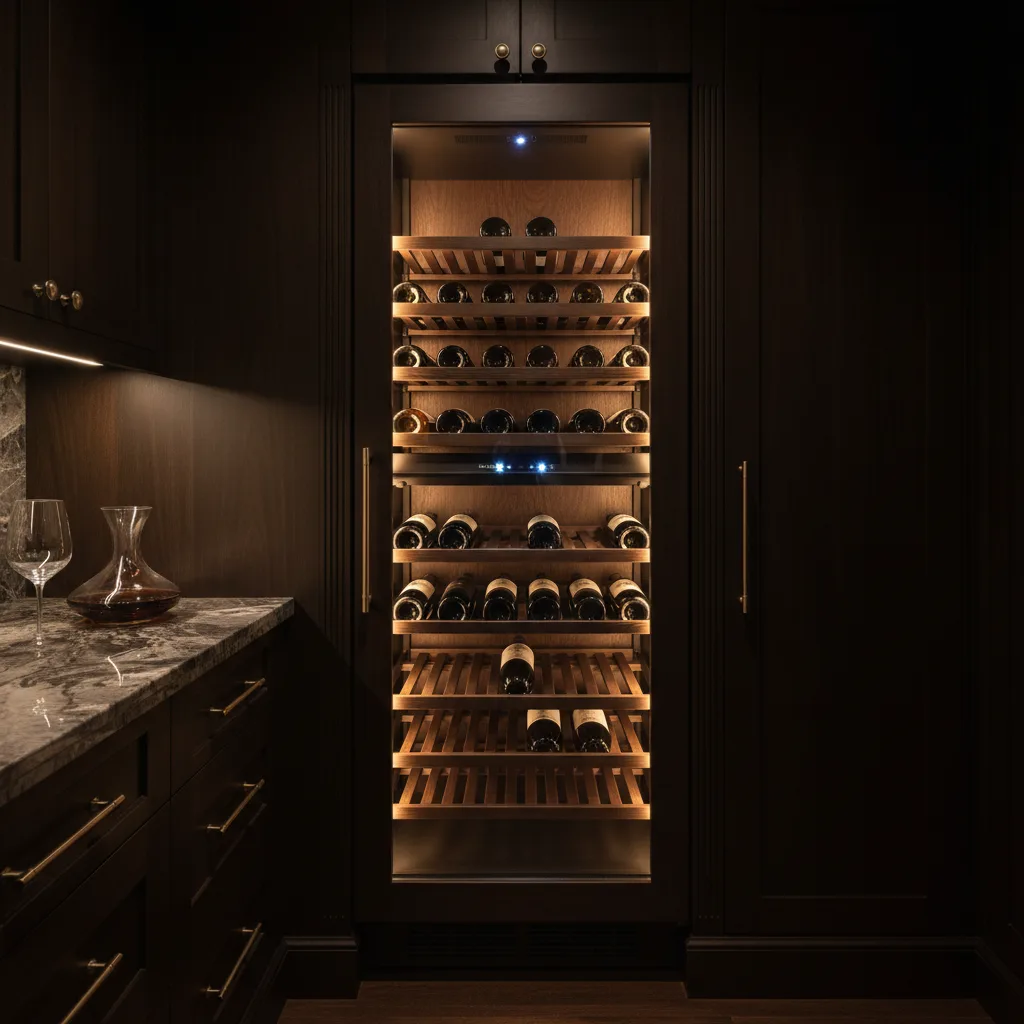
Wine coolers depend on stable humidity to keep corks from drying out, and Colorado's low ambient humidity works against that by default. If your unit doesn't have a dedicated humidity reservoir, keep it away from HVAC vents and check the door gasket seasonally, since a compromised seal lets dry house air in far faster here than it would in a humid coastal climate.
Maintenance Mistakes We See Most Often
A handful of habits cause a disproportionate share of the service calls we run in Douglas and Arapahoe counties.
Ignoring the recirculation line
Homeowners clean the condenser coils but forget the drain pan and defrost drain tube, which clog with mineral deposits from hard water and cause slow leaks that get blamed on the compressor instead.
Skipping range hood filter cleaning
A grease-saturated hood filter forces a range's ventilation to work harder and, on gas models, can affect how cleanly the burners draw air, worsening the altitude-related flame issues we already see.
Waiting for a total failure to call
A slightly slow ice maker or a dryer that takes an extra cycle to finish are early signals, not just inconveniences. Catching them early is almost always cheaper than replacing a burned-out component later.
The appliances that last longest in this region aren't the most expensive ones. They're the ones whose owners had the gas calibration checked once and then vacuumed the coils four times a year after that.
Our lead technician, on 10+ years of service calls across Lone Tree and Douglas County
How often should I clean my refrigerator's condenser coils in Colorado?
Every three to four months is a good baseline for homes in Lone Tree, Castle Rock, and Highlands Ranch, since dust and pet hair build up quickly in the dry Front Range climate and insulate the coils, making the compressor run longer than it should. If your refrigerator seems to be running constantly despite clean coils, Lone Tree Appliance Repair can diagnose it at (720) 575-1433.
Does altitude actually affect gas range maintenance?
Yes. At roughly 5,980 feet, thinner air changes the air-to-fuel ratio a gas burner needs, so orifices, igniters, and regulators calibrated for sea level can produce a weak or yellow-tipped flame over time. Lone Tree Appliance Repair recalibrates gas ranges, cooktops, and ovens for local elevation and can be reached at (720) 575-1433 for a diagnostic visit.
What maintenance actually prevents expensive appliance repairs?
Quarterly coil cleaning, checking door and gasket seals, clearing dishwasher filters, and replacing ice maker water filters on schedule prevent the majority of the service calls we run in the South Denver I-25 corridor. When something still seems off after basic upkeep, call Lone Tree Appliance Repair at (720) 575-1433 for an $89 diagnostic that's credited toward any repair.
Can I recalibrate my gas range's altitude settings myself?
Some ranges have a high-altitude conversion kit that involves swapping orifices and adjusting the air shutter, and manufacturer manuals sometimes describe the steps. In practice we recommend having a technician handle it, since an incorrect air-to-fuel adjustment can leave a range running unsafely rich or lean rather than simply underperforming.
How do I know if my dishwasher filter needs cleaning versus replacing?
Most modern dishwashers use a removable mesh filter that should be rinsed monthly, not replaced. If you see cracks, warping, or persistent odor after rinsing, the filter itself may need replacement, which is inexpensive compared to the pump damage that debris bypassing a failed filter can cause.
Why does my refrigerator door seem harder to close than it used to be?
This is usually a gasket that has hardened or lost its shape from years of dry indoor air, common throughout Colorado. A stiff or misshapen gasket lets warm air in, which forces the compressor to run more and can eventually affect the door hinge alignment as well.
Is it worth replacing an ice maker's water filter if the ice still looks clear?
Yes. Filter media saturates with dissolved minerals well before the ice shows any visible change, and by that point scale may already be building in the fill valve and line. Replacing the filter on the manufacturer's schedule, typically every six months, is far cheaper than clearing scale from an internal water line later.
What's the most common maintenance issue you see in Parker and Castle Rock homes specifically?
Hard water buildup in ice makers and dishwasher spray arms tends to show up more in that area than elsewhere in our service region, likely tied to local water supply mineral content. Regular filter changes and a quick spray arm check every few months usually keep it from becoming a bigger repair.
Ready to get your appliance fixed?
Call us any time — the line is answered 24/7 — or book a visit online in under a minute. Service visits run daily, 8 AM–6 PM.